
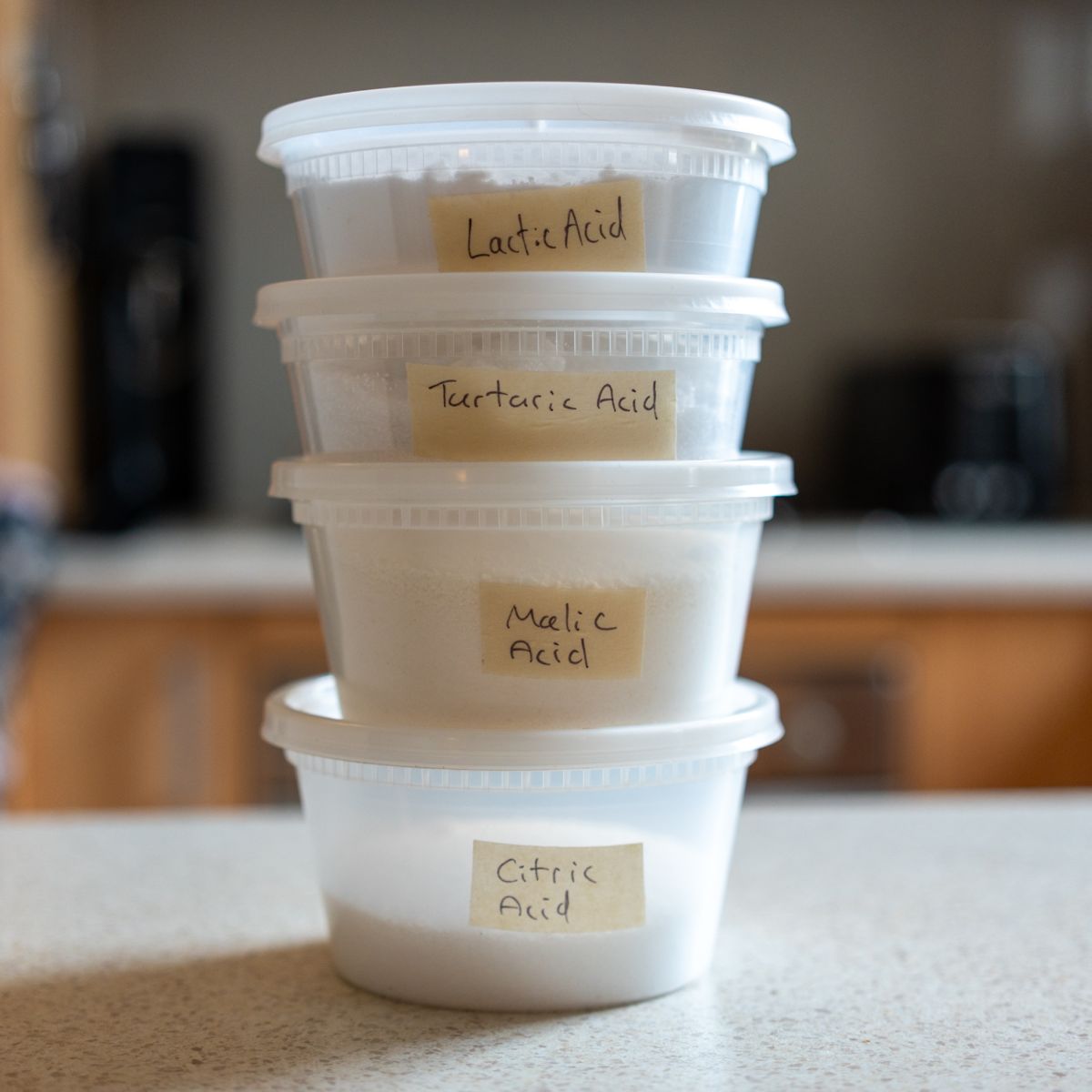
For decades, getting a cocktail to pop meant one thing: reaching for the citrus press. If you wanted sour, you squeezed a lime. But today’s craft cocktail movement has ushered in a new era of "acid adjusting" and crystal-clear drinks, all thanks to powdery, isolated organic acids.
By dissolving specific food-grade acids into water or juices, bartenders can tweak flavour profiles, mimic citrus without adding pulp, and keep drinks perfectly clear.
Citric Acid: The Classic Brightener
Where It’s Found: Lemons, limes, grapefruits.
The Flavour Profile: Sharp, immediate, and fiercely refreshing. It’s the baseline sourness most of us expect in a cocktail.
How To Use It: Citric acid is the backbone of "fake lime juice" or "buffered citrus solutions." By dissolving citric acid powder into water, you get the aggressive sourness of fresh lemon juice without the cloudy pulp or the ticking clock of spoilage. It allows bartenders to create crystal-clear, shelf-stable Daiquiris or Margaritas.
Malic Acid: The Crisp, Green Punch
Where It’s Found: Green apples, rhubarb, grapes.
The Flavour Profile: A lingering, sour-apple tang that hits the sides of your tongue and stays there a bit longer than citric acid.
How Bartenders Use It: To engineer a "lime juice" proxy, they rarely use citric acid alone. Limes actually contain a blend of both citric and malic acids. Combining them produces a much more realistic lime substitute. It’s also incredibly useful for intensifying fruit flavours in cordials or highballs without watering them down.
Lactic Acid: The Smooth, Creamy Sour
Where It’s Found: Yogurt, sourdough bread, fermented foods.
The Flavour Profile: Mild, soft, and distinctly milky or savoury. It offers a rounder acidity that lacks the sharp bite of fruit acids.
How Bartenders Use It: Lactic acid adds a velvety mouthfeel and a gentle sour tang to drinks. It is fantastic for savoury cocktails, tropical drinks that feature coconut, or clarified milk punches where you want a creamy texture alongside a subtle, structured brightness.
Tartaric Acid: The Heavyweight Drying Agent
Where It’s Found: Grapes, tamarind, bananas.
The Flavour Profile: Intensely tart, sharp, and mouth-watering, with a metallic or astringent edge that mimics the dry finish of wine.
How Bartenders Use It: Tartaric acid is the secret to building "wine-forward" characteristics into a drink without opening a bottle of Cabernet. It provides an excellent structural spine for stirred, spirit-forward cocktails, adding complexity and a long, dry finish that cuts beautifully through heavy sugars or bitter liqueurs.
Shop Our Range of Acid Powders Here
Quick Reference: The Bartender's Acid Guide
| Acid | Taste Profile | Best Used For... |
|---|---|---|
| Citric | Sharp, bright, aggressive | Crystal-clear citrus substitutes (Margaritas, Gimlets) |
| Malic | Crisp, green-apple snap | Revving up orchard fruit flavours; blending with citric to mimic lime |
| Lactic | Creamy, soft, savoury | Savoury drinks, tropical builds, adding velvety mouthfeel |
| Tartaric | Deep, wine-like, astringent | Stirred drinks needing a dry, structural finish; mimicking grapes |
Putting Acids to Work
While understanding the distinct profiles of citric, malic, lactic, and tartaric acids lays the conceptual groundwork, the real magic happens when you move these powders to the back bar. Transitioning from abstract chemical traits to practical mixology allows you to bypass the constraints of traditional citrus altogether. By precisely blending these isolated acids in water, you can construct "fake" lime and lemon juices that mimic the sharp bite and structural balance of fresh juice—completely clear, entirely shelf-stable, and measured to the exact gram for flawless cocktail consistency.
Lime Acid Solution
Fresh lime juice is roughly 6% total acidity, driven by a heavy dose of citric acid but uniquely rounded out by the sharp, green-apple snap of malic acid.
Ingredients & Tools
94g Filtered Water
4g Food-Grade Citric Acid Powder
2g Food-Grade Malic Acid Powder
*Optional: 10 Dashes of Lime Bitters
Tools: A digital scale that reads to 0.1 grams and a small glass bottle.
Lemon Acid Solution
Fresh lemon juice is slightly less complex than lime, sitting at about 5% to 6% total acidity. It is overwhelmingly dominant in citric acid, with only a tiny fraction of malic.
Ingredients & Tools
94g Filtered Water
5.7g Food-Grade Citric Acid Powder
0.3g Food-Grade Malic Acid Powder
*Optional: 10 Dashes of Lemon Bitters
Tools: A digital scale that reads to 0.1 grams and a small glass bottle.
Method of Preparation
1. Weigh the Liquids and Powders
Place a sanitised glass bottle on your scale and tare it to zero. Carefully weigh out your water first, then add the exact grams of citric and malic acid powders.
2. Agitate to Dissolve
Cap the bottle and shake vigorously, or use a milk frother/blender. Because these acids are highly water-soluble, they will completely dissolve into a crystal-clear liquid within a minute or two at room temperature.
*3. Incorporate Aroma (Optional)
Flavour is 80% smell. Because isolated acids are completely odourless, adding some citrus bitters helps mimic the expression of citrus peels. Shake intensely after adding to disperse the bitters.
Storage & Usage: Store these solutions in sanitised glass bottles in the fridge. Because there are no fruit sugars or solids, they will easily last months. Use them in a 1:1 ratio exactly as you would fresh juice (e.g. 30ml of your lime solution for 30ml of fresh lime in a Daiquiri).
Using the same preparation method as above, try these additional ways to utilise acid in your drinks:
Champagne Acid Solution
Introduces a refined acidity, use by the dash or ½ tsp.
94g Filtered Water
3g Food-Grade Lactic Acid Powder
3g Food-Grade Tartaric Acid Powder
Citric Acid Solution
Use to adjust juices and syrups or add by the drop in drinks.
100g Filtered Water
25g Food-Grade Citric Acid Powder
Malic Acid Solution
Use to adjust juices and syrups or add by the drop in drinks.
90g Filtered Water
10g Food-Grade Malic Acid Powder
Lactic Acid Solution
Use to adjust juices and syrups or add by the drop in drinks.
90g Filtered Water
10g Food-Grade Lactic Acid Powder